
Written by Kelsey
28 Jan 2026


Sweden can be an expensive country to live in. According to the Swedish Migration Agency, the 2026 financial maintenance requirement is 10,656 SEK per month. Of course, actual expenses vary based on your lifestyle. So, here are some ways to save money as an international student living in Sweden!
1) Track your expenses, make a budget, and prioritize!
Before you get to Sweden, it can be hard to gauge exactly how much you’ll be spending. In the first few months, it can be helpful to track your spending. For example, keep your receipts after grocery shopping. Especially if you try a few different stores, this can help you decide which is the cheapest. Once you have an idea of how much you’re spending, you can create a reasonable budget. You can identify areas where you’d like to save a bit of money, and perhaps spend it on different priorities. For instance, I’d rather spend more money on traveling and experiences with friends, rather than new clothes and shoes. Since I know this is one of my priorities, I can build that into my budget. Of course, leave some room for spontaneous purchases! Living in a new country can be hard, and it’s totally okay to treat yourself every once in a while!
2) Mecenat
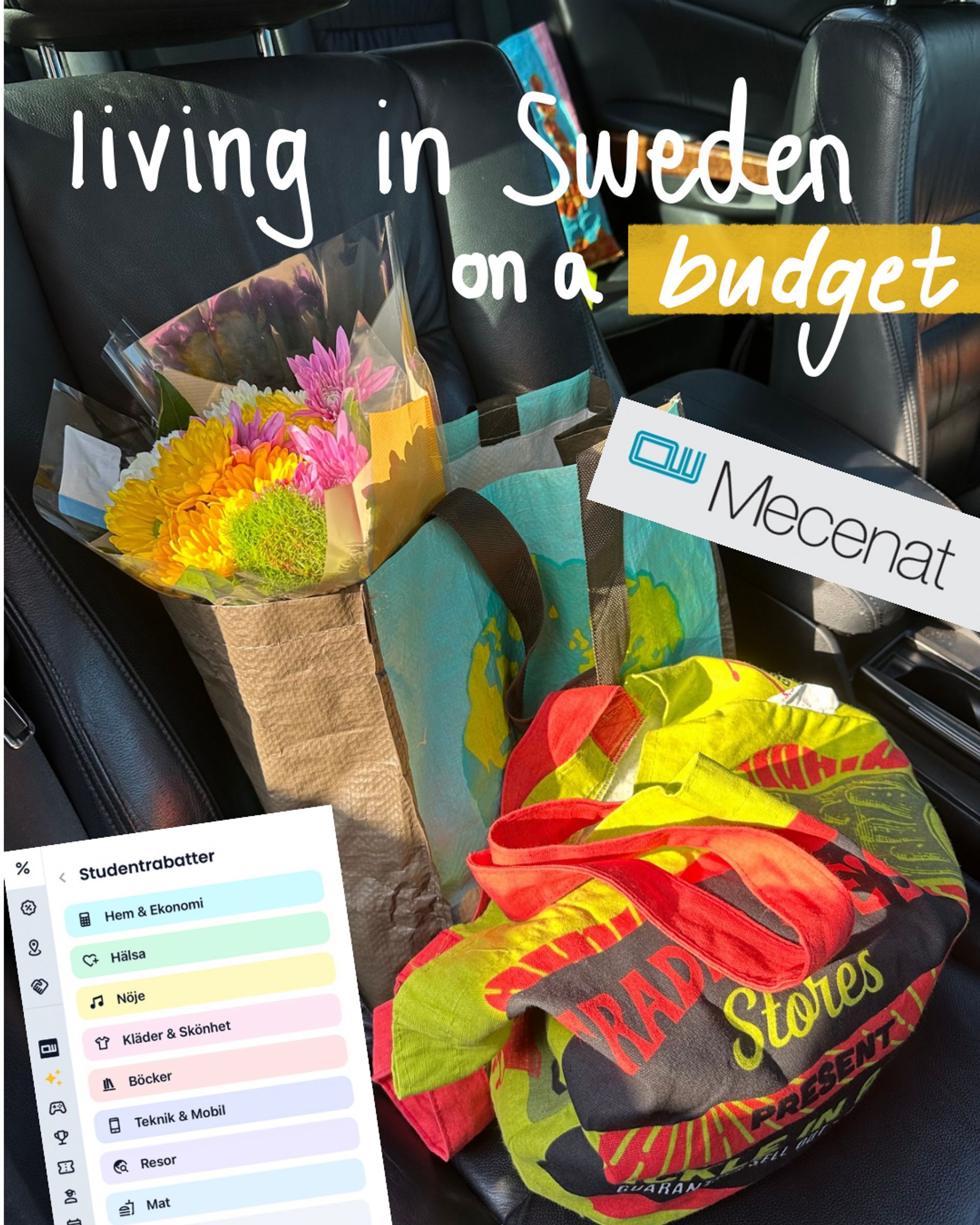
Mecenat is your golden ticket to student discounts! On the Mecenat app, you can find student discounts for countless locations, including fast food restaurants, clothing stores, trains and hotels, and more. I was able to find discounted student tickets to Liseberg here, and a cheaper meal at MAX. It’s worth checking Mecenat before you buy something, as you might have a deal to use! I would also recommend asking physical stores if they offer a student discount. You’d be surprised how many places will say yes, from bars to thrift stores! Mecenat cards are also a way of verifying that you’re a student, so don’t be surprised if a cashier asks to see it before they can apply your discount.
3) Fitness deals
No matter what country you live in, it’s important to stay active for your physical and mental health! There are of course free options, including walking, biking, or online workout videos. Workout videos are convenient and free, and typically require only minimal equipment like a yoga mat. While I occasionally work out at home, I prefer the structure and accountability of a gym environment. Gym memberships can be a bit more expensive, but there are still deals you can take advantage of.
First, I’d recommend checking out if your apartment complex has a gym. For instance, Olofshöjd – a popular student housing area in Gothenburg – offers memberships for 400 SEK for 6 months or 600 SEK for 12 months. This is a much cheaper price than most gym memberships. However, they do not offer group fitness classes there. Otherwise, most gyms offer student discounts on memberships. Keep an eye out for promotional deals. I joined Fitness24Seven while they were having a 50% discount for 2 months and a free start-up fee (normally 249 SEK). It seems like they run this promotion several times per year! While the price will still go up to the normal student price (269 SEK a month), it’s nice to save money where you can!
4) Smart grocery shopping & home-cooked meals
In my experience, Willy’s and Lidl generally offer the cheapest prices on groceries. While ICA is one of the more expensive options, I’ve also heard good things about the price of ICA Basic products (their own generic version). However, this can vary by location, so it’s probably a good idea to check out the shops near you. After you have a personal number, I’d recommend signing up for loyalty programs like Willy’s Plus and Lidl Plus. This way, you can get extra deals that are only for members!
No matter what grocery store you go to, you can save money by shopping based on what’s on sale. This can also be a fun way to experiment with new recipes. There are deals that change weekly, plus there are normally clearance sections and 30-50% off bread. Another way to save is to buy frozen fruits and vegetables, as they don’t go bad as fast, are a convenient alternative to chopping fresh produce, and are often the same price or cheaper than the fresh version. I’d also recommend paying attention to how much product you’re getting for the price. Sometimes, two products will be the same price but one has more in it, or a bulk version of the product is actually a better price than a cheaper but smaller version.
Eating out in Sweden can be quite expensive. To save money, I usually reserve this for special occasions like friends’ birthdays, for instance. The good news is that packing a lunch is part of the Swedish culture. Invest in some reusable containers and cutlery, and you’re good to go! There are plenty of microwaves and fridges on campus, so you can store and reheat your food if needed.
5) Balance quality with price for clothing, shoes, & accessories
Unless you’re from a cold country, you’ll probably have to buy proper winter clothing once you’re in Sweden! You’ve probably heard this a million times, but thrifting is a great way to save money, find unique pieces, and be more sustainable. Sometimes, you can find brand new pieces from high-quality brands! I would suggest thrifting before buying new. Also, check to see if your apartment or school has a free shop. For example, Olofshöjd has a free shop with tons of clothes, shoes, books, kitchen equipment, decorations, and more donated by past and current residents. Everyone loves free things!
If you can’t find the right fit or style for you, then it’s time to turn to traditional stores. It might sound counterintuitive, but the cheapest option might not be your best bet. At the same time, just because something is expensive doesn’t mean it’s high quality. Quality is important, so I would recommend reading reviews and checking out the material breakdown of the pieces you’re considering. For instance, 100% wool sweaters will hold up better and be warmer than polyester clothing. Another example is my Dr. Martens boots, which were expensive upfront, but have survived daily wear in all sorts of weather conditions. If you’re going to spend money on something, you want it to last the entire winter, and many winters to come! Some pieces are worth the investment.
6) Take advantage of libraries!
While it might sound boring, I’ve found libraries to be an incredibly useful way to stay on budget! Checking out books at the library is much more cost effective than buying new books. Before buying textbooks or the latest book on your wishlist, see if your university or public city library offers the book! Plus, with a free city library card, I also get access to movies and TV shows through the platform Cineasterna! Aside from checking out free resources, libraries are also a wonderful free place to hang out and study. As nice as it can be to study in a cafe, coffees and chocolate balls can add up! So, I prefer to study for free in a library atmosphere. If your university has several libraries, I recommend rotating between them! A change of scenery can be nice and make you more productive.
7) Public transportation discounts
As a student, you can also get student discounts on public transportation! In Gothenburg, I must say, the public transportation is more expensive than I expected. For a 90-day pass, the student price is 1,740 SEK. I usually take public transportation every day, often multiple times per day, so I get the most bang for my buck! Also, keep an eye on your email! Sometimes Västtrafik sends you deals. Once, I got a free 14 days of travel in all zones! I also have friends who prefer to walk or bike, only buying single-use public transit tickets as needed. This is probably a cheaper alternative! Just beware that this will likely be a little more time consuming, and you will be more exposed to weather conditions like snow and rain. This might be worth it for you!